5 cu/ft Teardrop Anagama & Hybrid Wood Firing Workshop January 26-February 1, 2027 (Unload February 6)
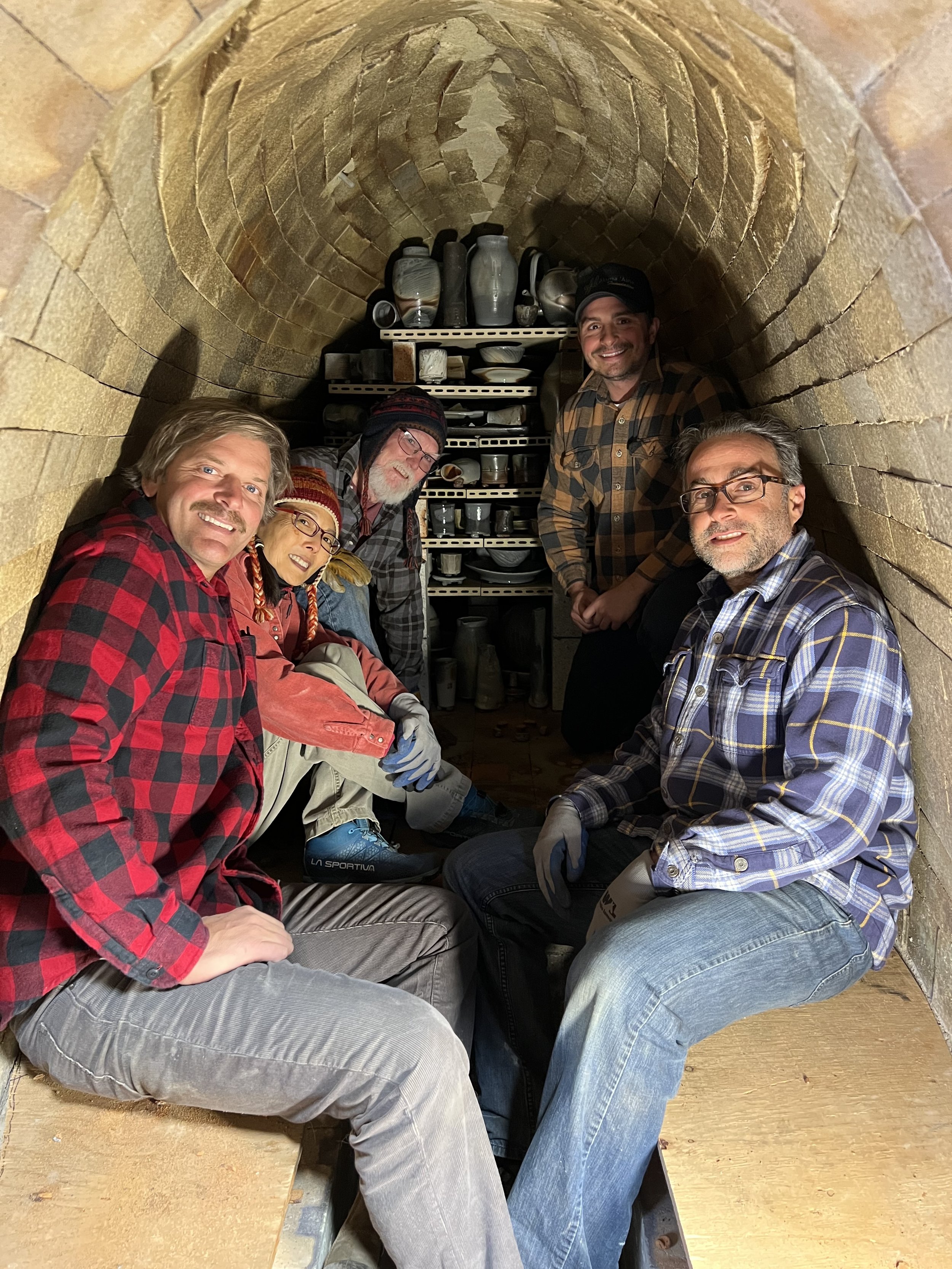
Join me for the winter firing of the teardrop anagama wood kiln, and hybrid kiln. Anagama style kilns are long in their design, promoting intense ash and flash development. We will load the kiln January 26-28, beginning at 9am promptly, complete loading around 5pm, and begin firing January 28. Your work will need to be ready to load January 26 at 9am, feel free to arrive after 8am. If you cannot be here for loading, or if you need to do any glazing, please plan to come January 25, 1-5pm to drop off, and/or glaze your work. Firing will be completed by February 1 around noon. Kiln unloading will be February 6 at 11am. Firing shift preference is determined by the order of registration, early registrations receive priority firing shift requests. Due to limited space, no refunds, no cancellations, no credits will be given for non attendance. Space is limited and these workshops fill within a few days, please signup immediately if you’d like to come fire with me.
The loading/firing this time is focused for more “strategic loading” of work. We will extend the “coal building” cycles to layer more ash, and depth within the ash glaze. In addition to firing the large teardrop anagama, we’ll load and fire the hybrid as a part of the workshop.
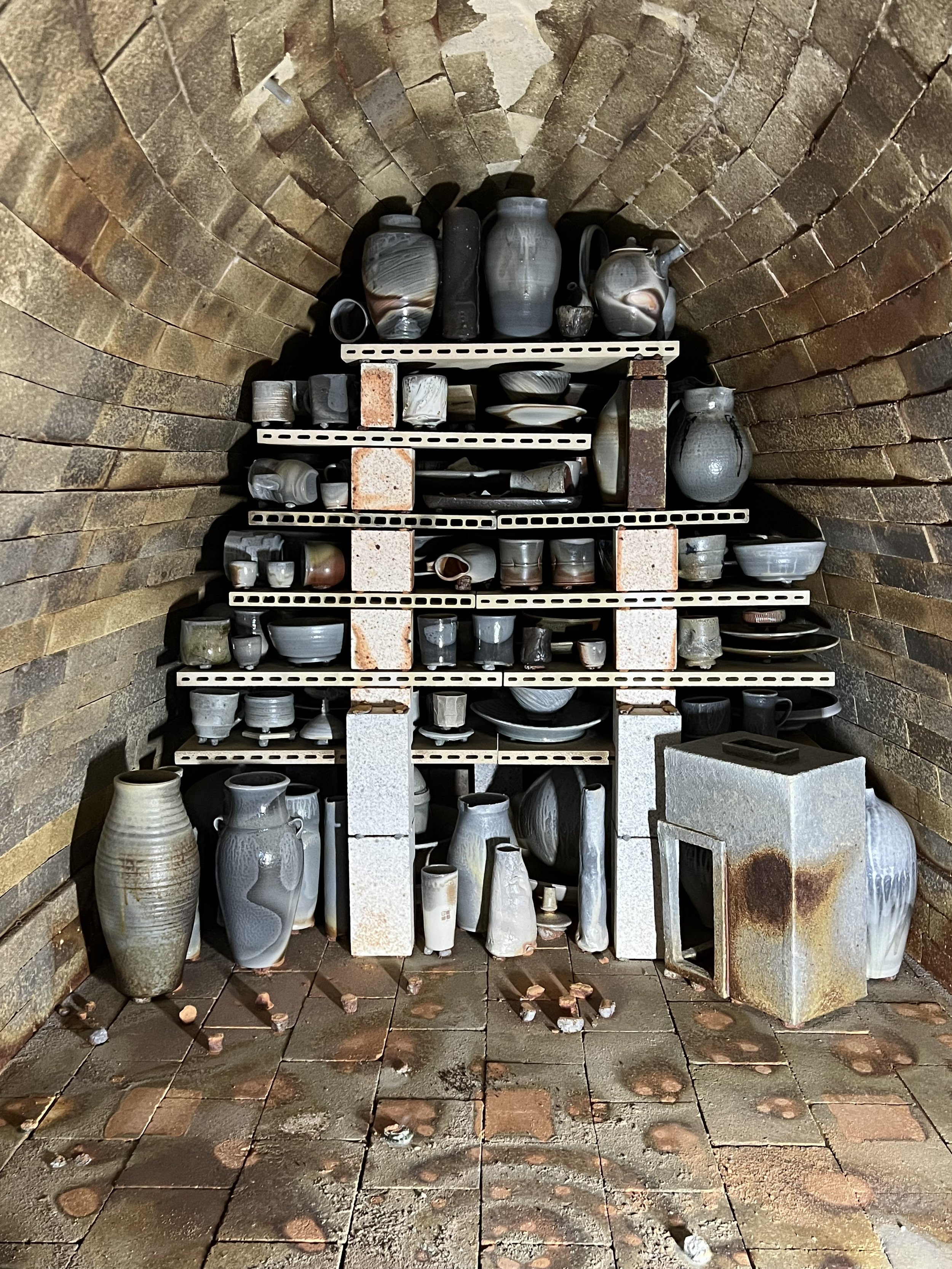
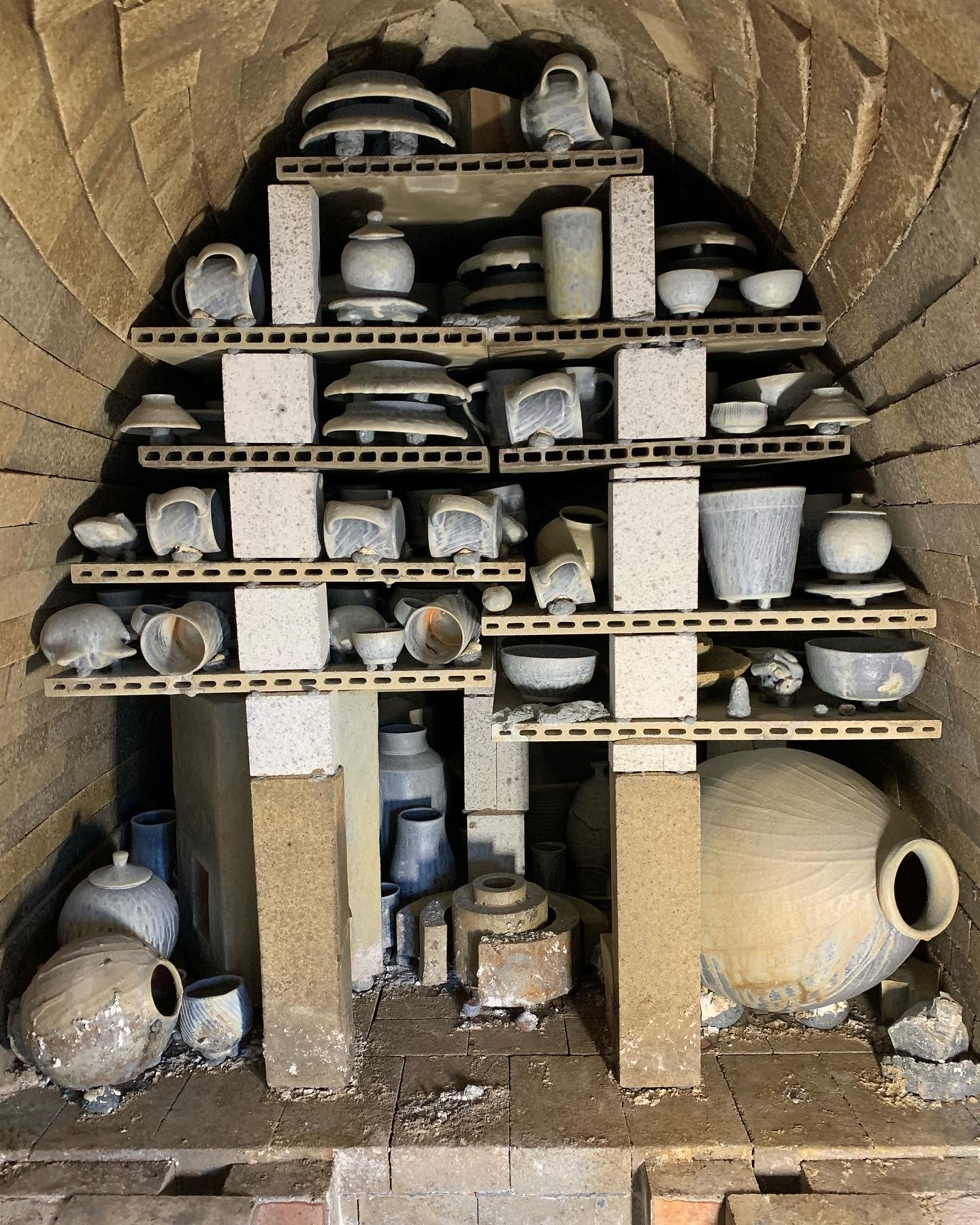
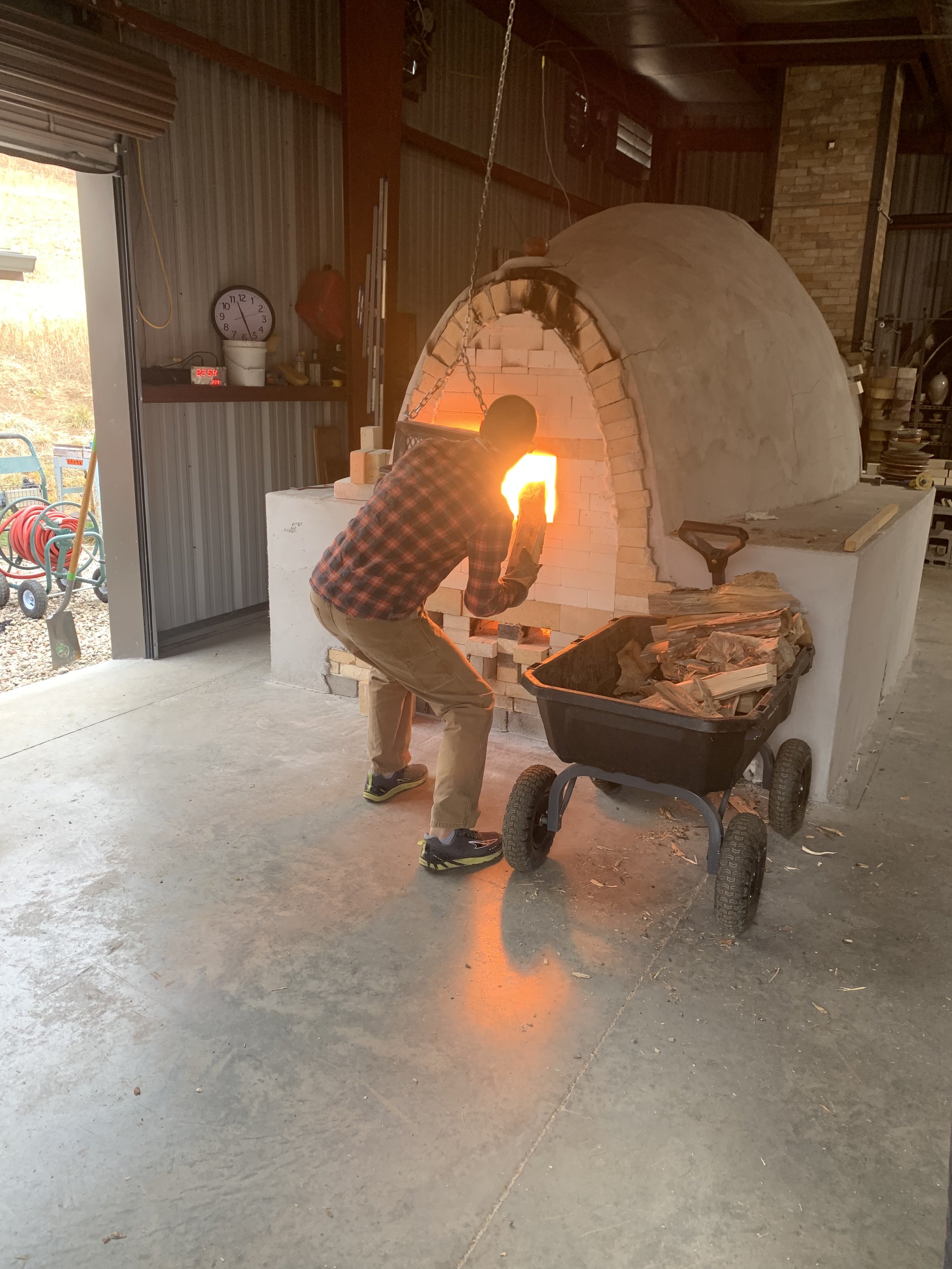
I chose the teardrop style anagama kiln for the ability to load in 2-3 days, fire for 3-4 days to achieve even temperatures without the need for side stoking, achieve intense development of dramatic flame paths, and the incredible ash glaze buildup capabilities. A large firebox facilitates easy stoking patterns, and an elaborate sutemna chamber superheats the back of the ware chamber while slowing down the flame and ash as it moves through the kiln. The stackable space in the kiln is approximately 150 cu/ft (plus firebox), providing each of the workshop participants a variety of surface options. Wood firing color development is highly influenced by the type of clay used. I highly recommend using Cone 10-12 range Continental Clay Wood Fire Porcelain, Domestic Porcelain, B-Clay, Tableware, or Soda Clay. These readily available options are excellent choices for making your artwork for the firing. Your work needs to be bisque fired to cone 06 (04-08 is fine as well) prior to arrival.
You are welcome to use Shino type glazes for the interiors of cups, vases, or closed forms, as most other glazes will bubble due to the repetitive reduction cycling throughout the heating period, and extensive cooling cycle. Slip can be used on a plate, inside a bowl, or the exterior of any surface. Pots are often loaded on their sides, or wadded between other pots. You can also use Red Iron Oxide for brush work decoration, however no other oxides or stains are permitted due to the fact they fume off onto other work. No Copper is allowed, as copper will turn all the porcelain pink for several subsequent firings.
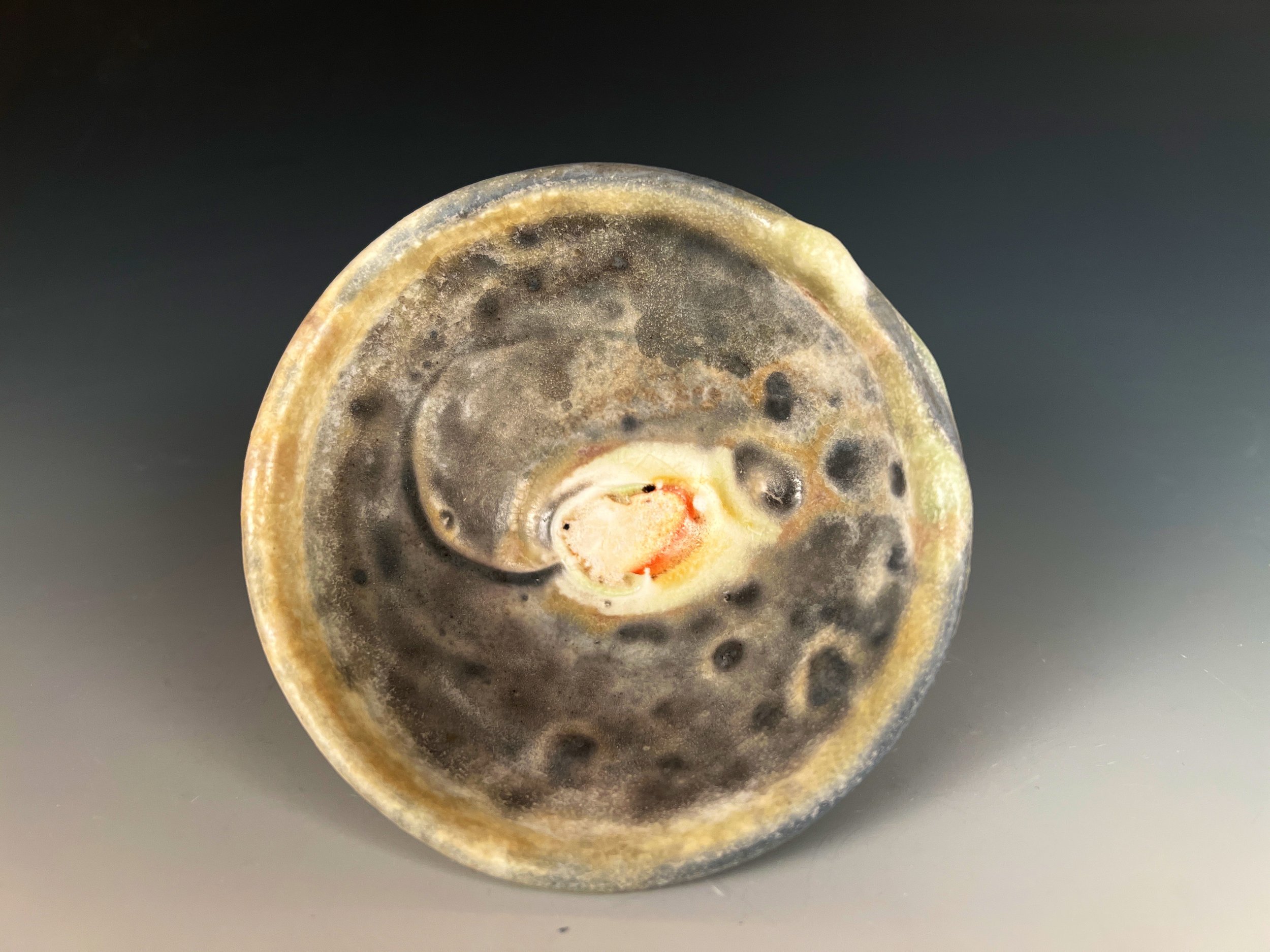
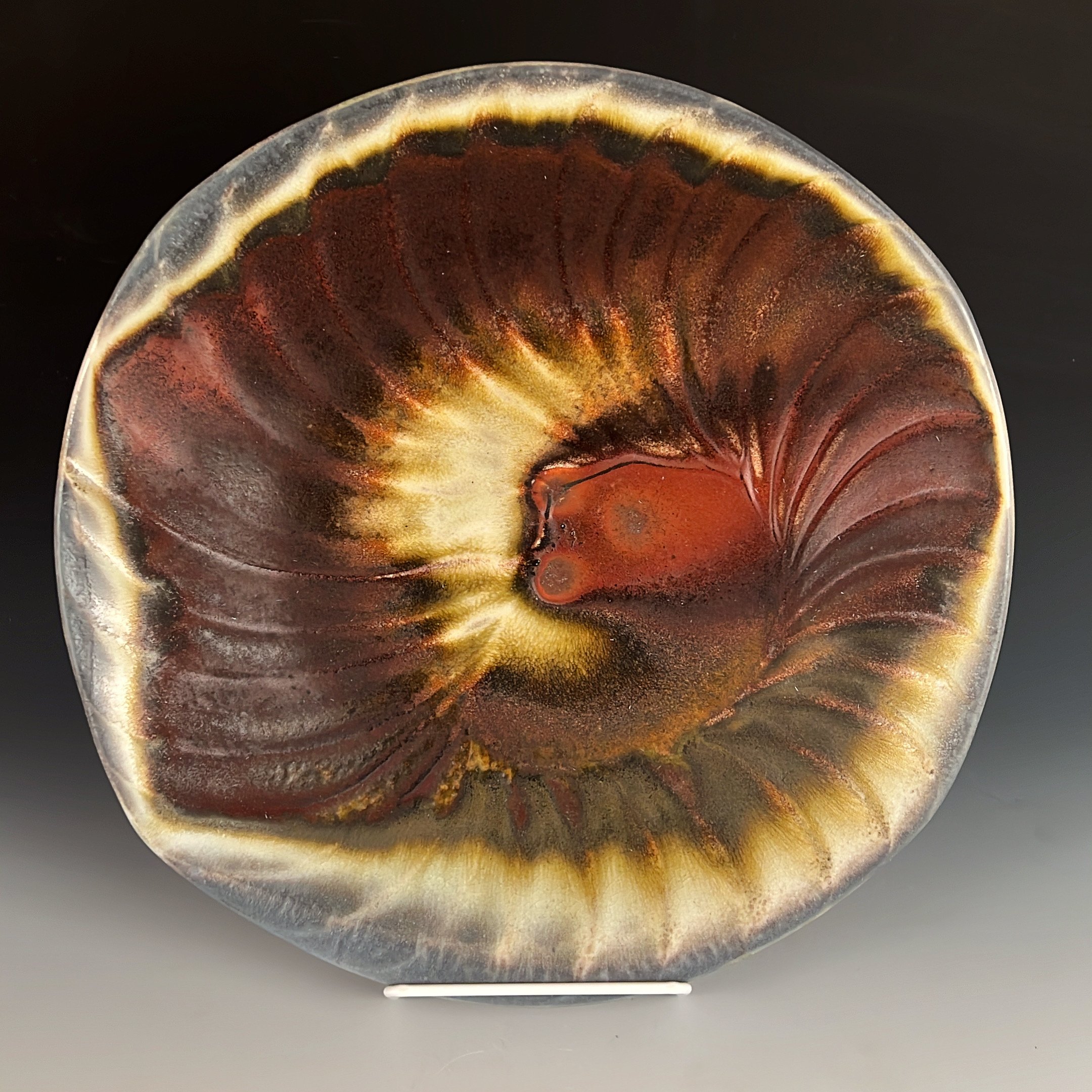
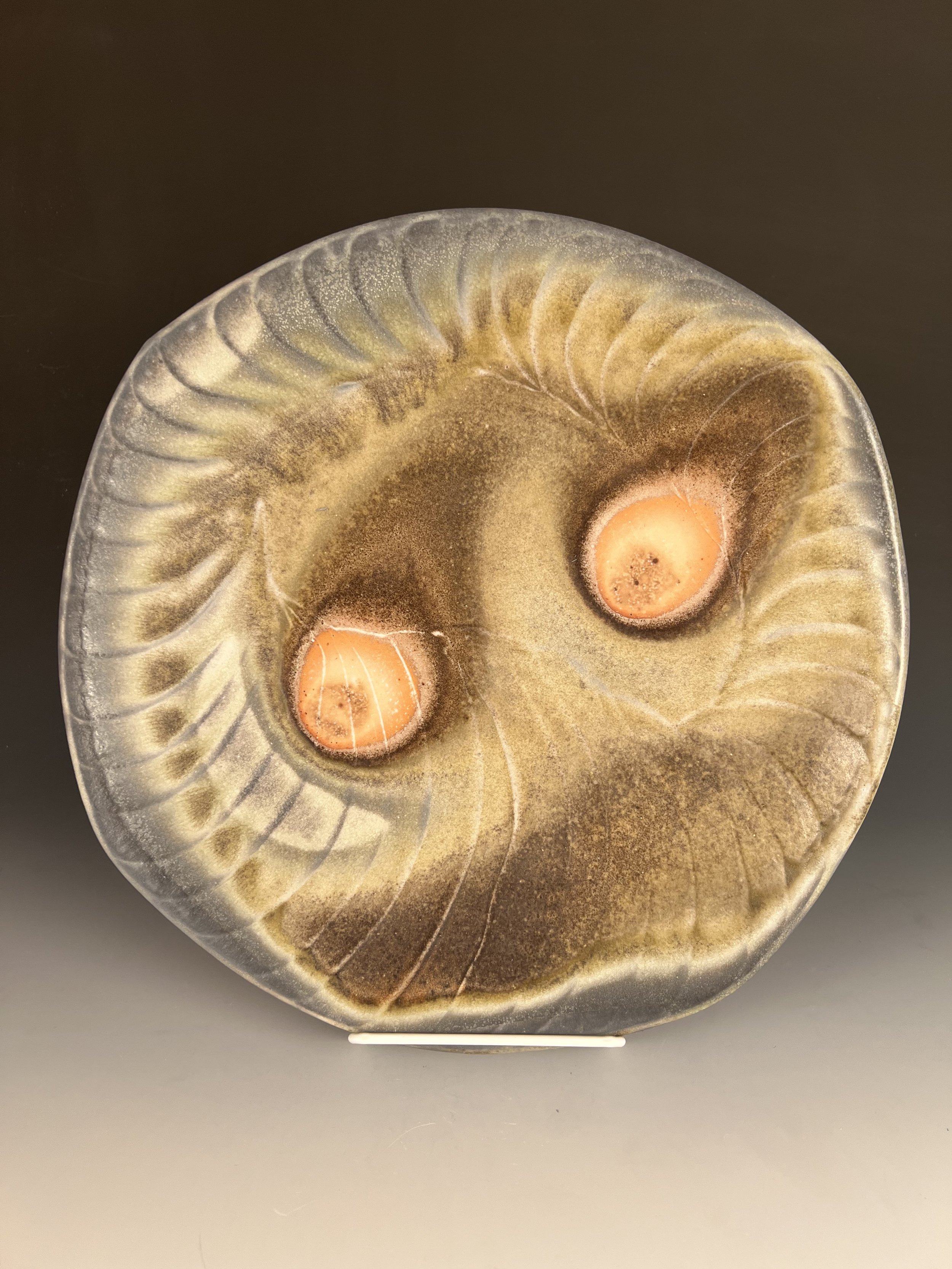
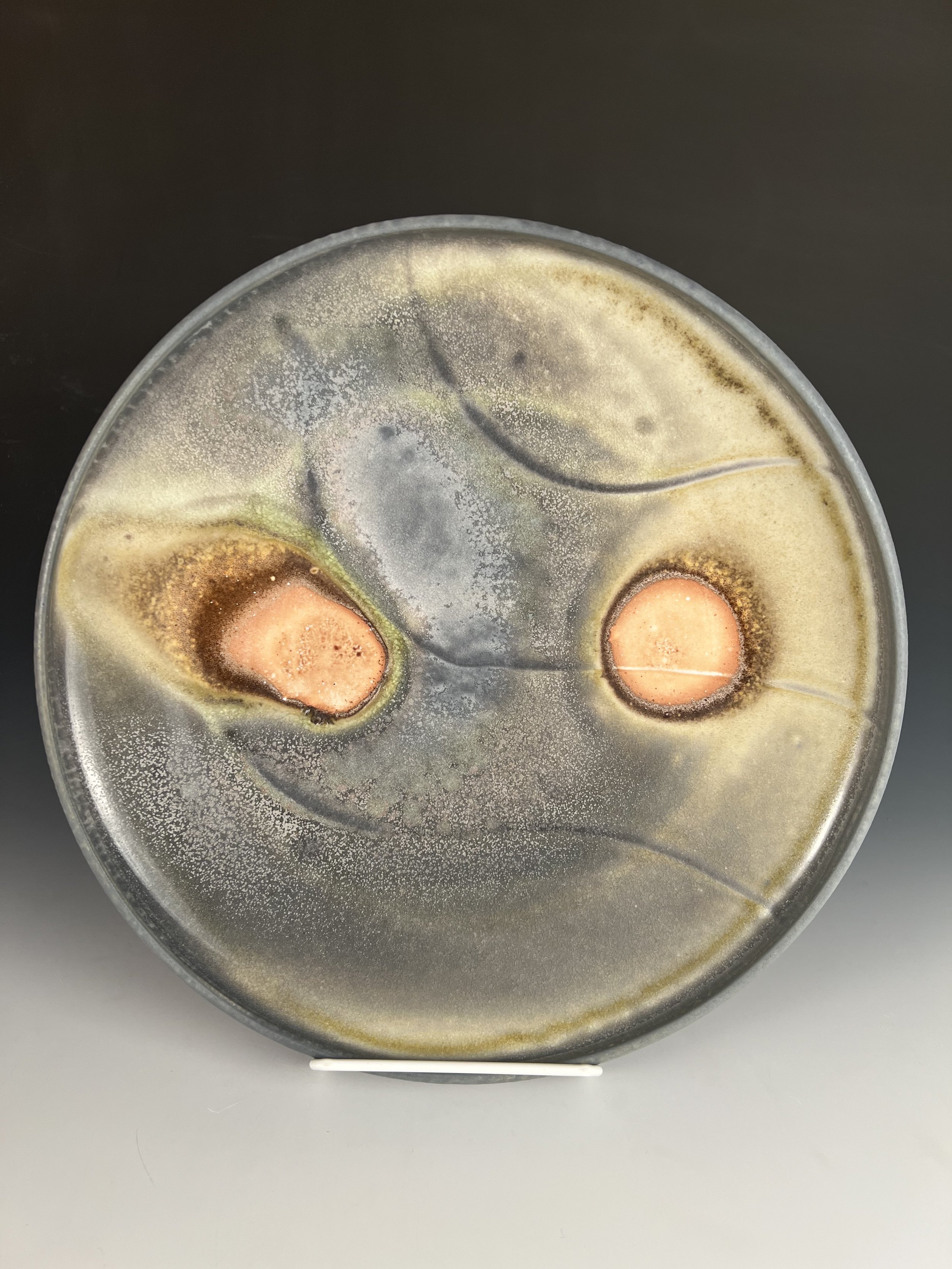
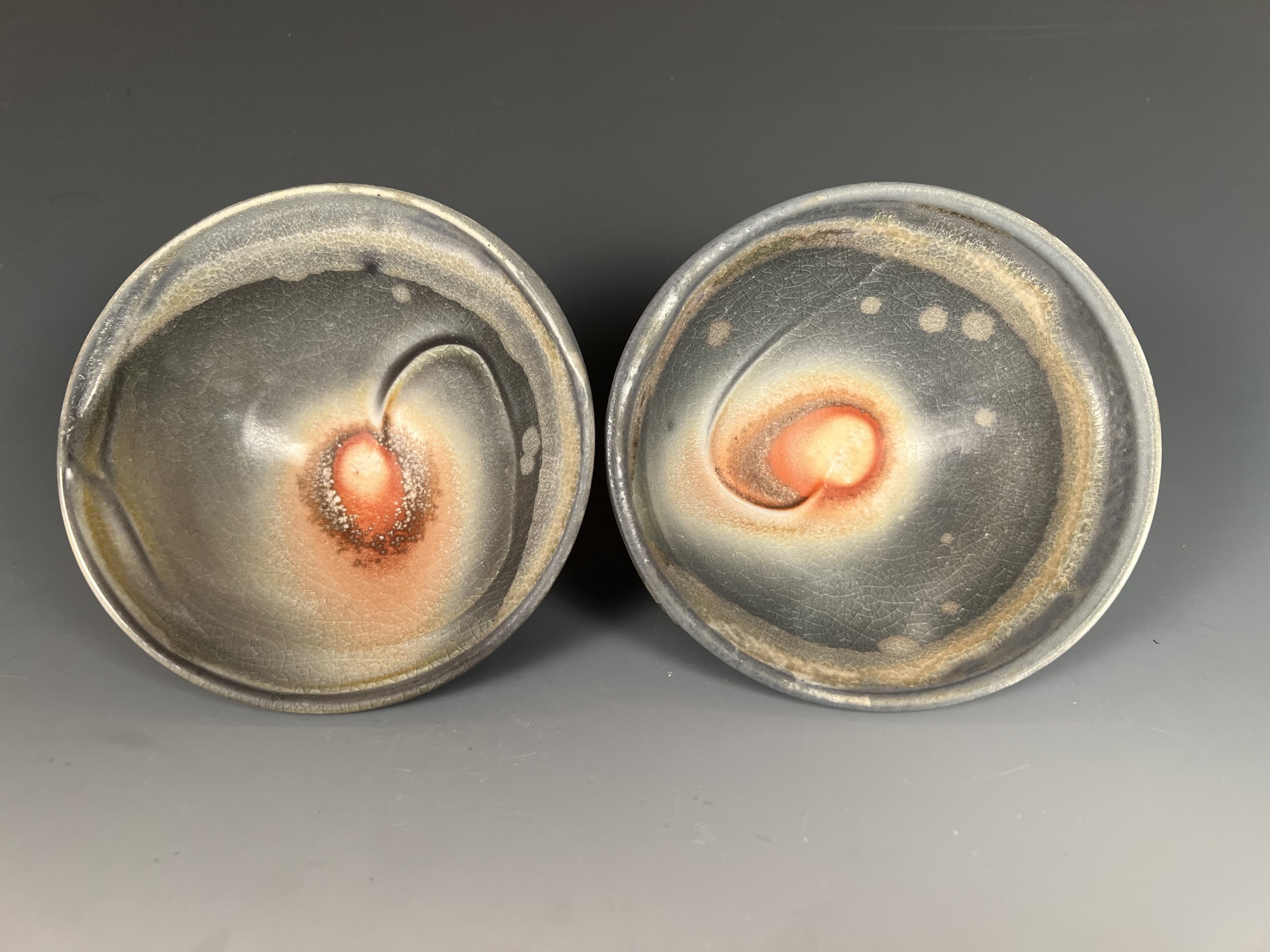
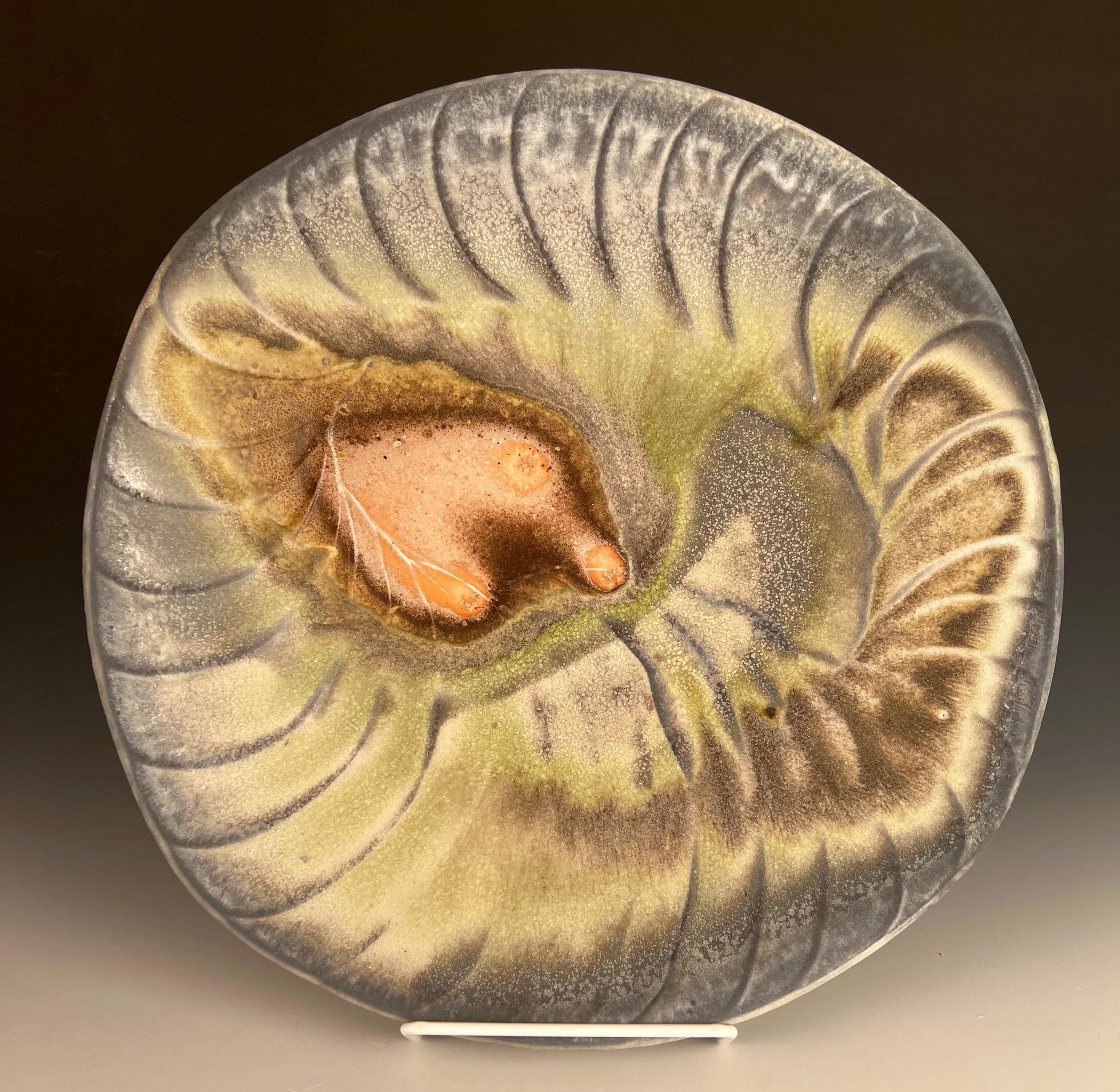
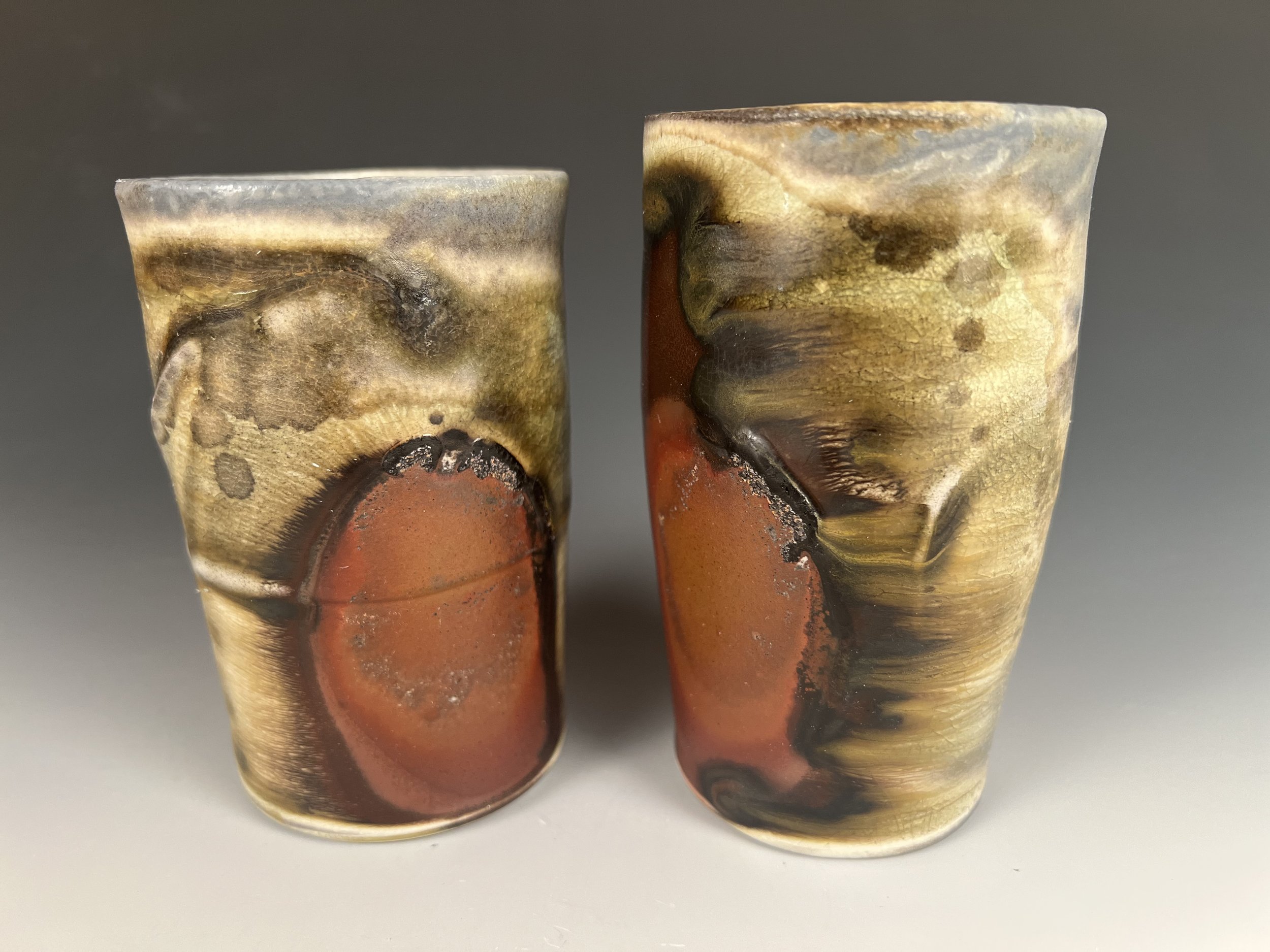
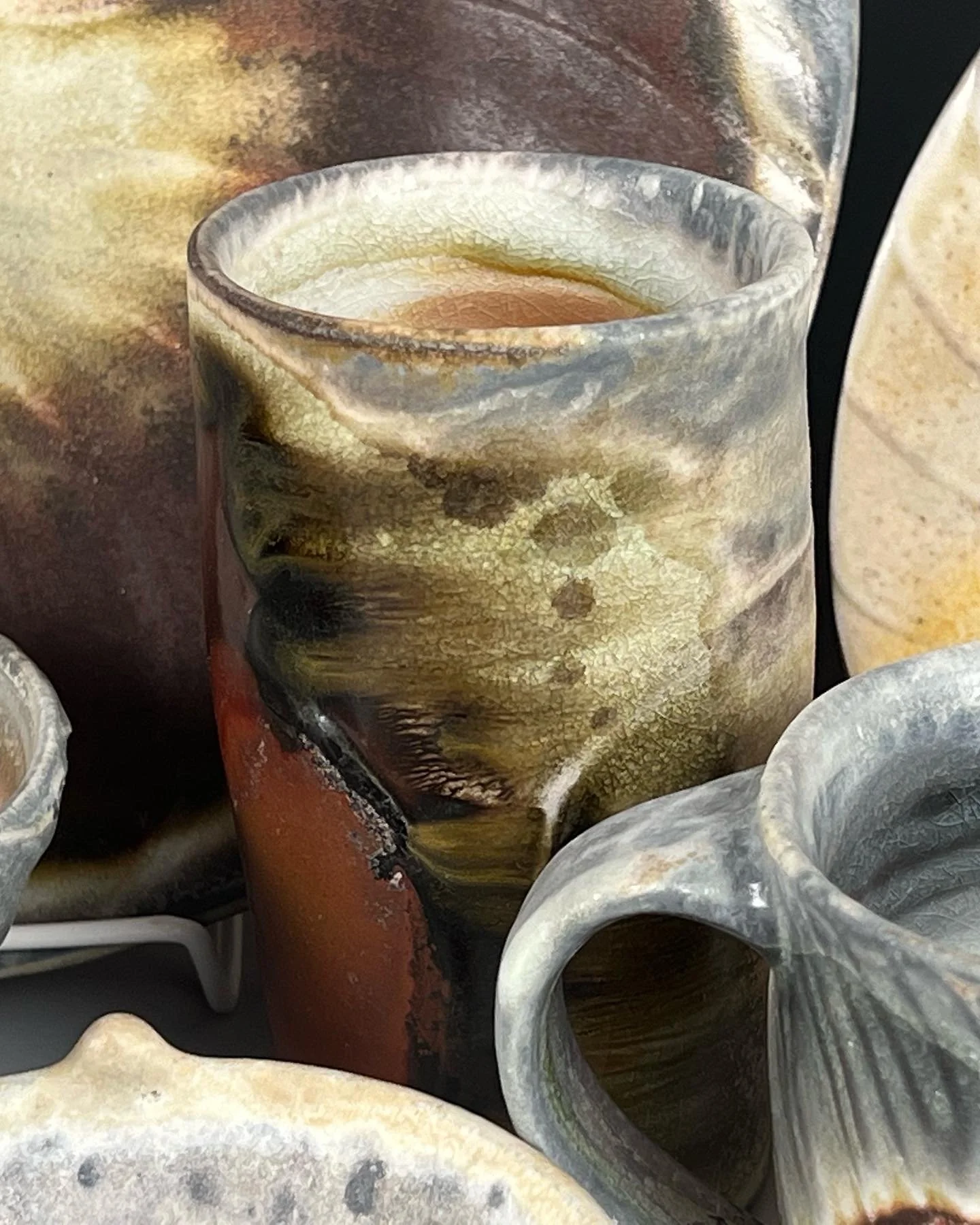
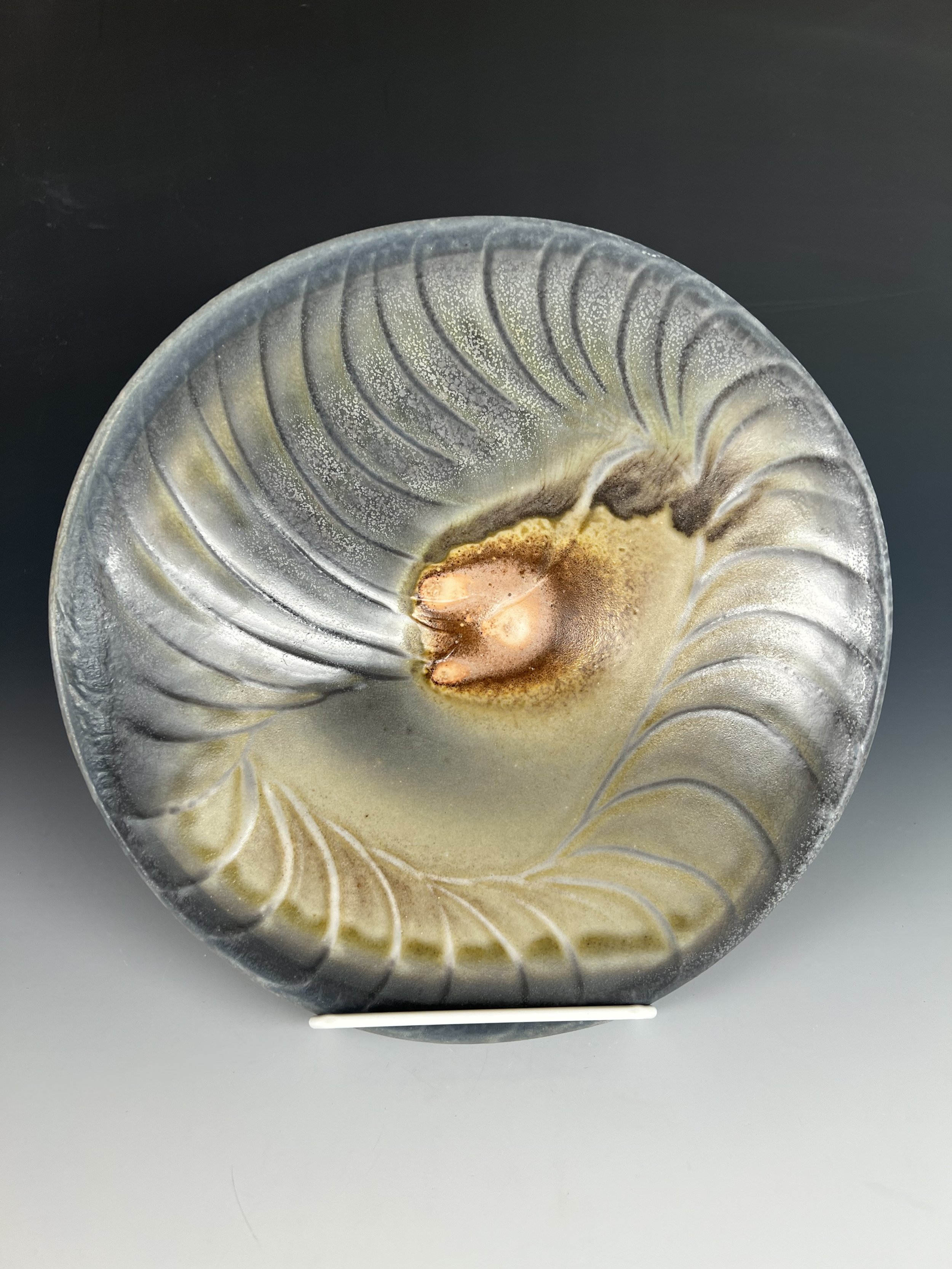
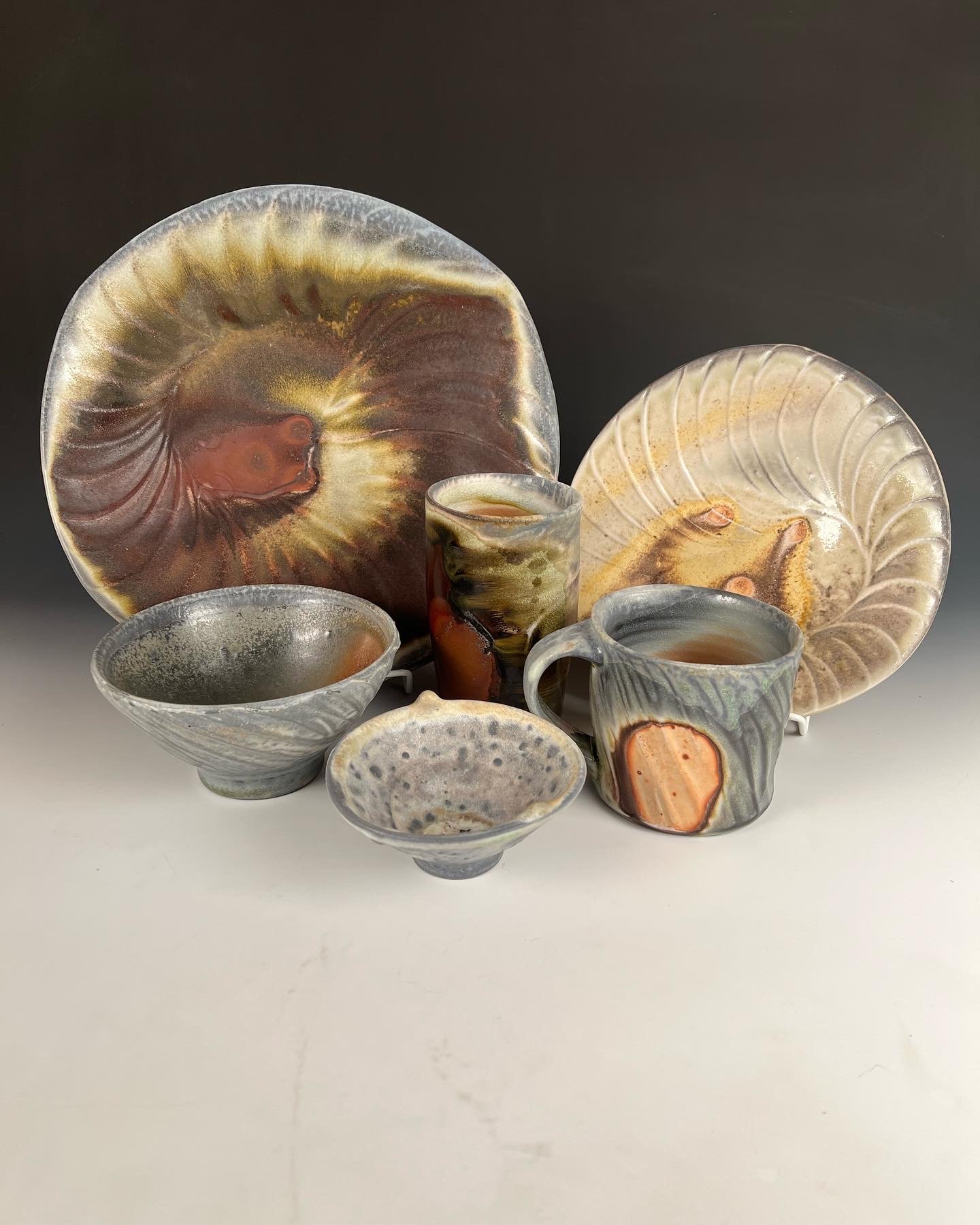
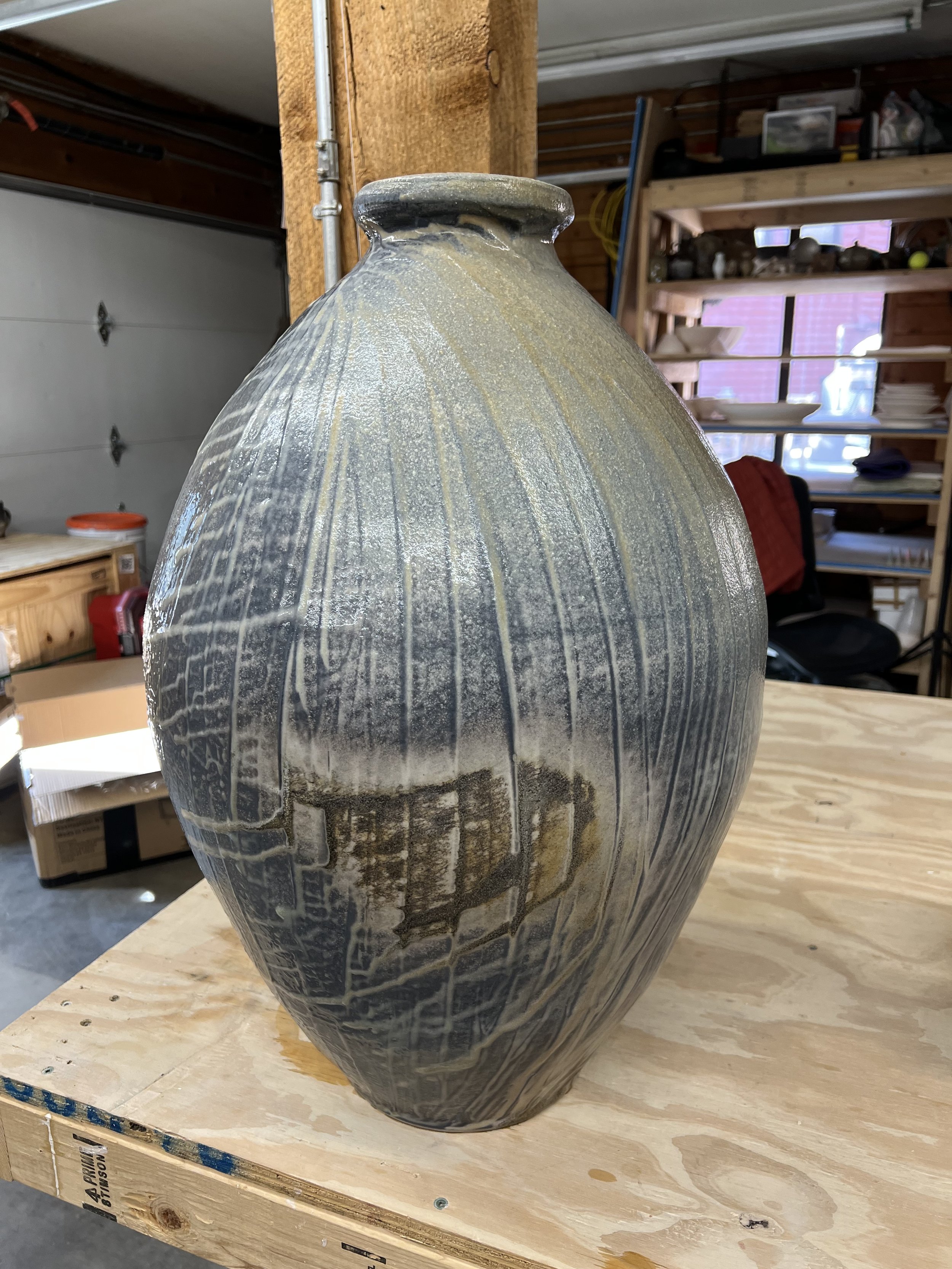
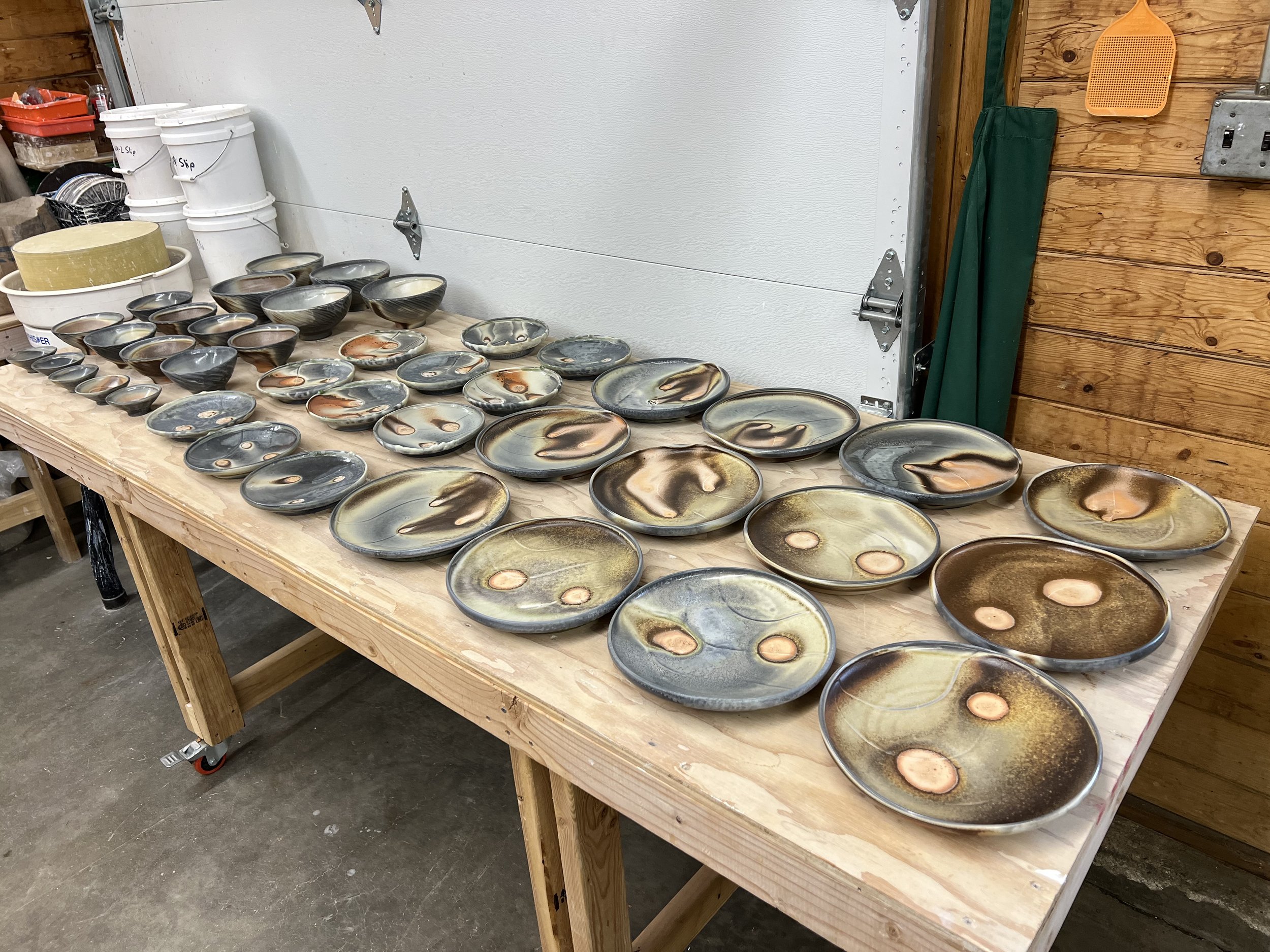
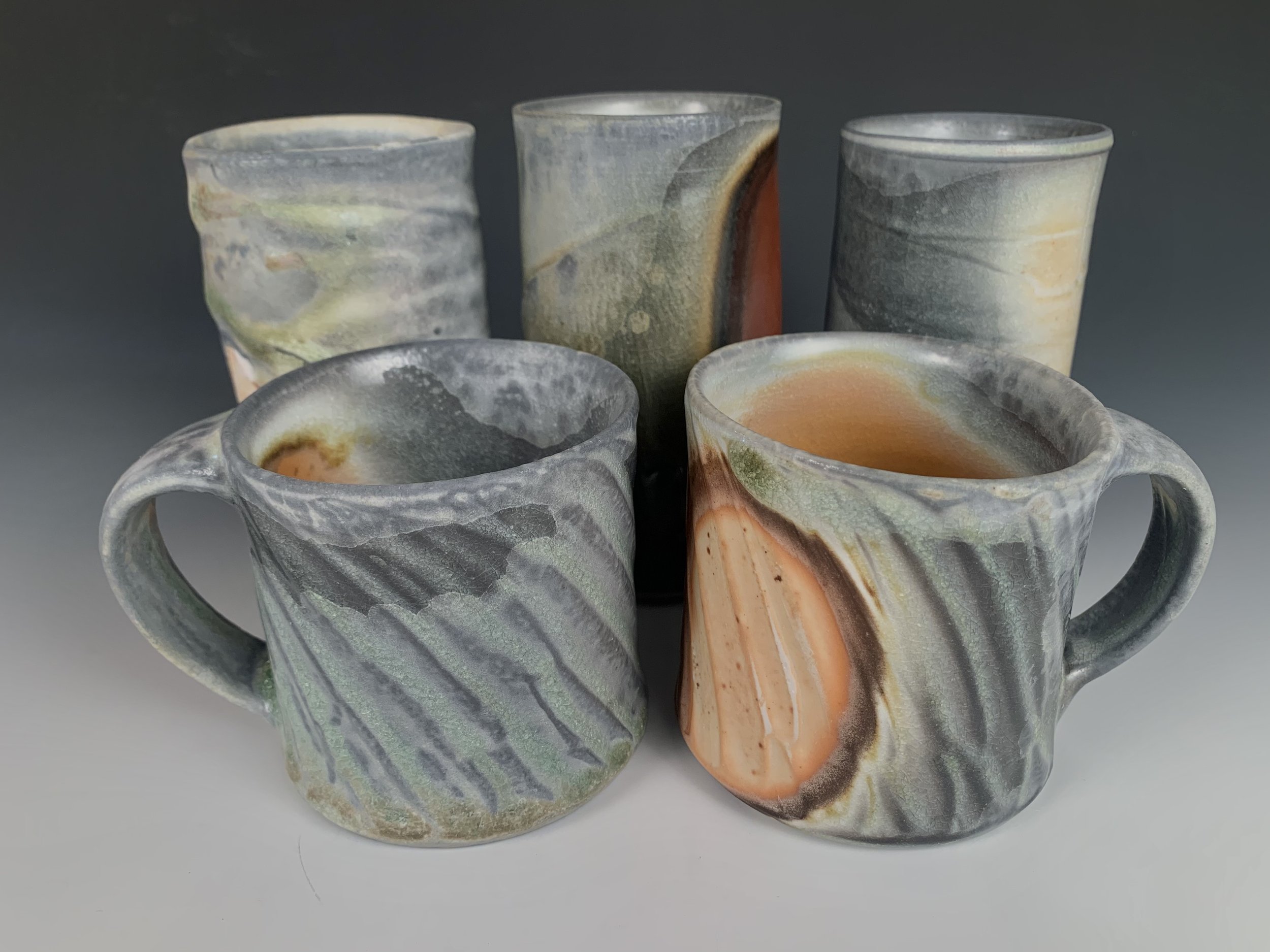
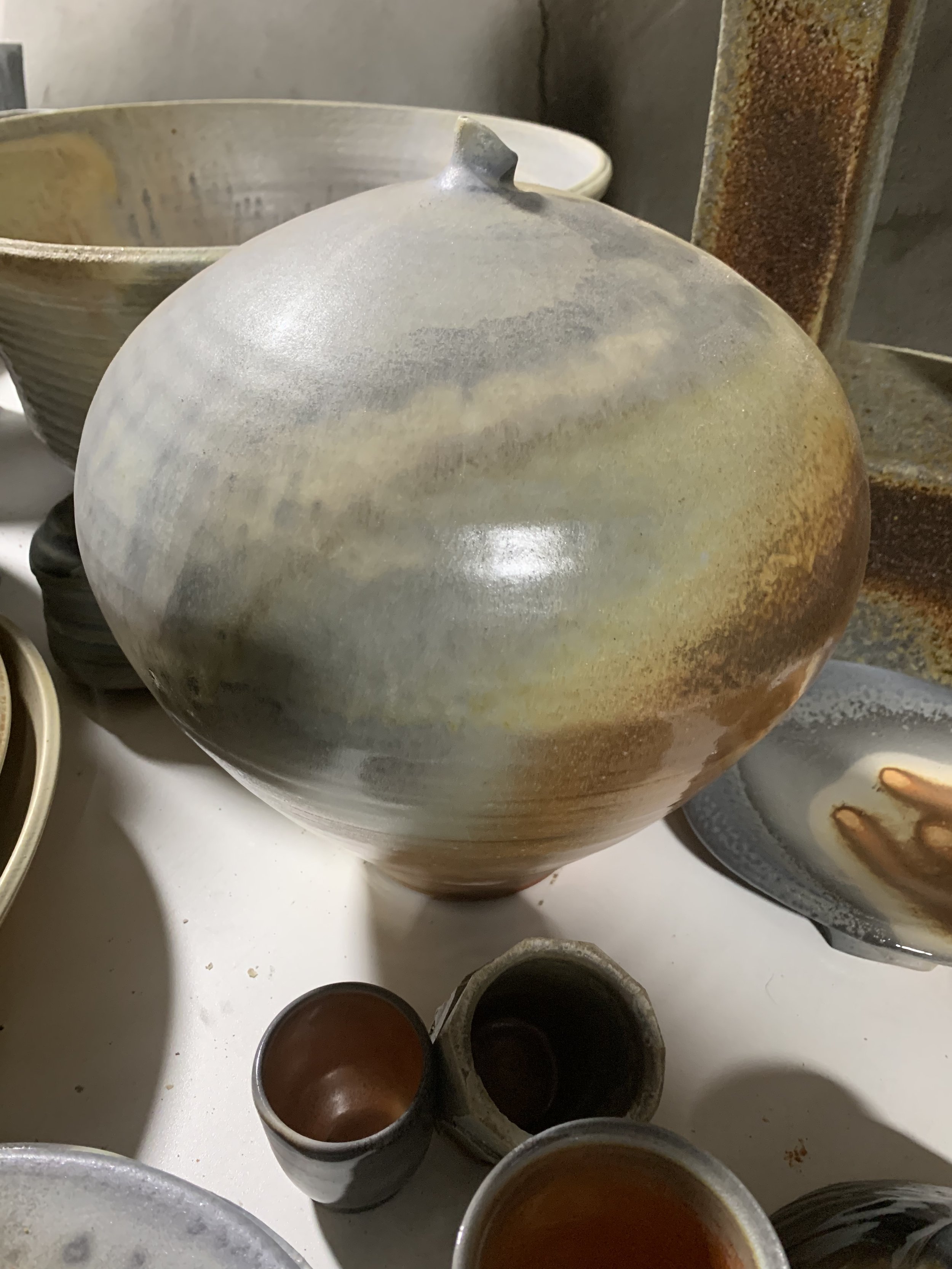
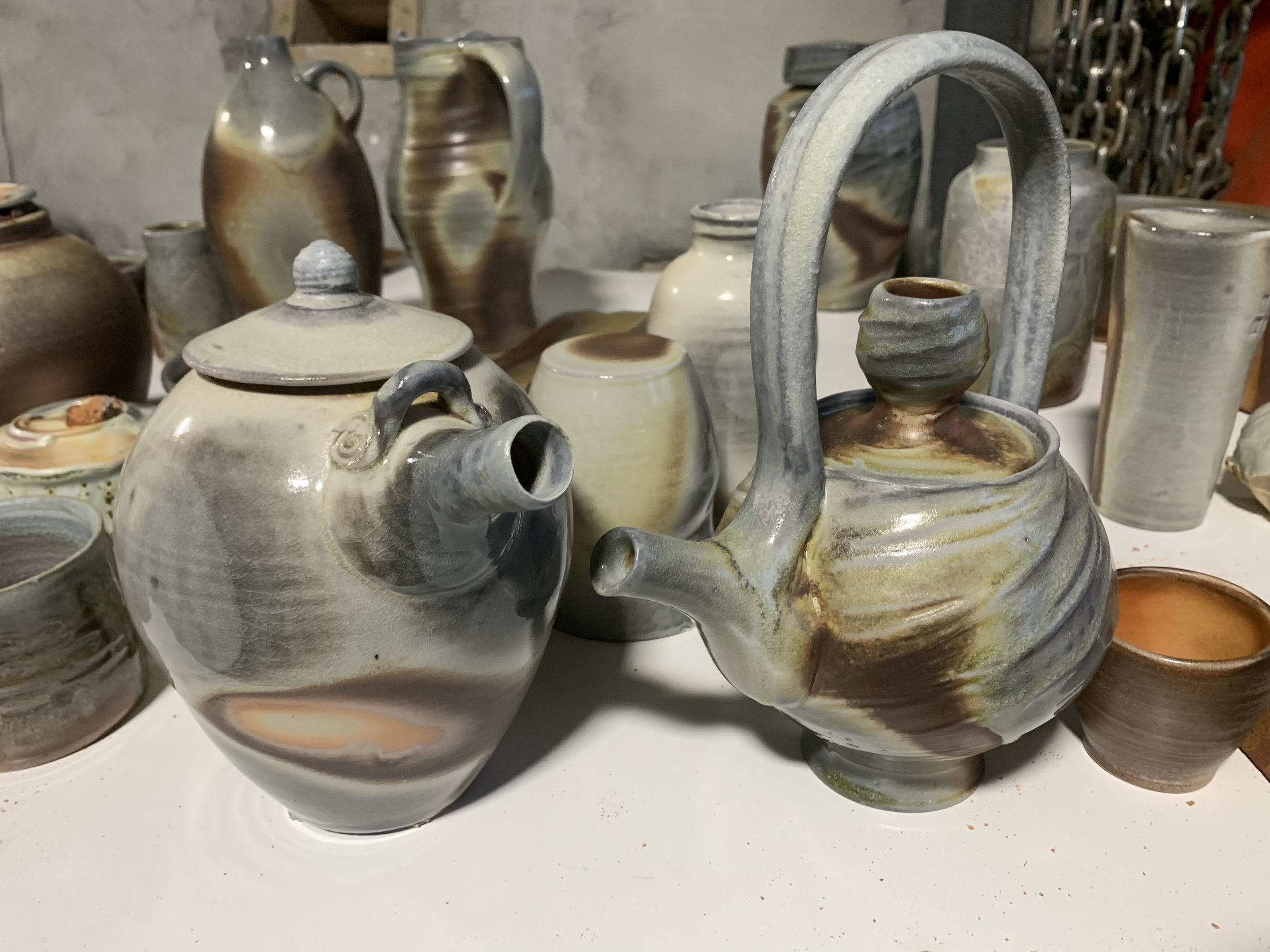
If you review my images on this website, or the number of galleries who sell my work, you’ll notice a range of color, and depth. This is entirely achieved through the firing process. I do not use any glazes (other than a Shino glaze liner for cups, vases, etc.), I do not use any stains, I have one slip I use for the interior of bowls on occasion. I will teach you how to paint with flame, and ash, there is absolutely no need for applied glaze prior to firing. This might be a different type of firing approach than you are accustomed to, especially if you have some atmospheric firing experience previously. Actively glazing through firing allows us to explore the vast surface quality, color range, and pattern through our stoking rhythm with wood. I have a variety of wood types we will burn at different points during the firing to build “layers of glaze”. I buck and split Siberian Elm, Honey Locust, Silver Maple, Curly Maple, Green Ash, and Apple wood from a tree service company in Denver. I use a small amount of Douglas Fir, and Scrub Oak harvested from my property, along with poplar, oak, and walnut trimmings from a hardwood finish carpenter supplier in Denver. This variety of wood gives us multiple options to layer ash when building surface depth and color.
The firing shift schedule will be finalized a few weeks prior via email, 2 people per shift, 6-8hr long shifts, each participant will get 2 firing shifts minimum. Meals and housing are not included, so please plan accordingly. There are plenty of airbnb, bnb, and hotels very close. Denver is 30 minute drive, and the airport is 1 hour from the studio. There are several private car services from the airport including Uber/Lyft. Need a Ride is a local service, call John 303-564-5858, expect to pay $75-100 each way.
Weather in the foothills at 7,500 ft elevation can change quickly, dress/bring layers (no synthetic clothing materials during the kiln firing), wear close toe shoes (leather preferably), tie back long hair, remove jewelry, jeans/longs sleeve shirt/hat/neck bandana is a good outfit during the firing, light duty work gloves for gathering wood, and “stick” welding gloves for stoking.
If driving, Colorado State Traction Law is in effect October - May regardless of weather which requires 4wd/awd, and/or dedicated snow tires/3pms rated mountain/snowflake tires. Our private dirt road often has frozen sections in the shade, a 2wd car with regular tires likely won’t make it up/down our road.
Students must bring cone 10 bisque fired (no re-fired work) work for the firing workshop. I’ll supply my very popular Lambert Schlip for students to use. Students should leave the exterior of their work as raw clay, or use a slip. A Shino style glaze can be used to line the interiors of cups, vases, etc.
To determine the appropriate amount of work based on the space you reserve, do the following: Use masking tape to create a space 24”x30”, stack your work 12” tall in this space as if it were glazed ware (plates can be stacked, we have to envision your work as the space it will occupy in the kiln, not how tight you can fit everything into a box), this is 5 cu/ft of space. This is simply a way to help you determine the appropriate amount of work for your reservation. No pieces can be more than 20” in any dimension. Please bring work up to your reserved amount of space in the kiln, we always have plenty of work to fill the kiln. Do not bring “extra work”, we do not have space and it will not go into the kiln. We can also fire the Hybrid cross draft wood/soda kiln during this firing workshop depending on enrollment and quantity of work.
I’ll provide slips, glaze, and wadding. We’ll learn about loading, firing, atmosphere, fire triangle, Btu requirements, stoke scale, interval stoking, stoking patterns, air flow to help develop flame paths, clay body color development, and ash accumulation. We will also have discussions about design decisions when making work for atmospheric kilns. I'll clearly explain in simple language how to assess the kiln atmosphere, temperature manipulation, stoke interval, etc. as we fire the kiln together. You will leave the workshop with some nice pots, and a much more thorough understanding of wood firing so you can apply the knowledge to future firings.